
Powering New Developments: Getting it right when it comes to substation sourcing and installation
7 Apr 2026



As a growing number of Private Finance Initiative (PFI) contracts approach expiry across the UK, many local authorities and public sector bodies risk ‘sleepwalking’ into complex and potentially costly handovers.

Here, George Bailey, Business Unit Manager at Kiwa CMT, examines the practical and financial risks associated with expiring PFI agreements and, crucially, what organisations should be doing now to mitigate them.
Originally launched in 1992, and later expanded under the Labour Government from 1997, the Private Finance Initiative (PFI) represented a new way of harnessing private sector investment to deliver public sector infrastructure to a specification defined by the public sector.
Its rationale was based on the premise that expertise in this area of delivery lay within the private sector rather than within Government.
The PFI saw multiple projects undertaken across the UK, ranging from street lighting in major cities, to schools and hospitals – which would be constructed then managed by the private sector over a lifespan of 25 to 30 years.
Irrespective of the views of using private finance in this way, the take-up was significant. Figures published in 2020 by the National Audit Office suggested some 700 PFI projects were in existence with a capital value at the time of £57bn, and £160bn remaining to be paid out for the use and maintenance of these assets.
The end of PFI for the delivery of new projects was announced in 2018; however, many PFI projects are continuing, with an enormous swathe of them due to be handed back to the public sector within the next few years.
This means the timing is critical for both the contractors with current responsibility for these projects, and local authorities navigating tight budgets and increasing scrutiny around public spending, to examine what is due to be handed back, and the likely cost and management implications for both parties.
This brings with it many challenges. The 25- or 30-year span of many of the projects will have seen significant staff turnover, with few, if any, of those involved at the outset of these projects, still in the same post, the same organisation, or the job market at all.
Meanwhile, the nature of the sector means the contractors who were originally awarded the contracts may no longer exist or have been subsumed into other entities, with knowledge of the project dissipated accordingly. This goes in tandem with the inevitable lack of consistency between organisations in terms of how maintenance and asset management has been undertaken since then.
What emanates from this is a situation where neither the contracted organisation, nor the local authority to which the project is to be handed back, will necessarily have a clear idea of what assets exist, how long they have been in place, what – if any – maintenance has been undertaken, and whether they meet current standards and regulations in terms of both design and materials.
At the same time, many current owners will lack the resources internally to undertake the scale and depth of audit needed to provide a clear picture of the condition of assets to pass on to the local authority.
The possibility exists that some projects may have seen huge upfront investment in assets which have since then been permitted to degrade. This means the value of the project, and the assets, may not be anywhere near what was originally stated if there is significant work required to restore and improve it.
But these issues need to be addressed by all parties concerned from both a financial and operational point of view. Local authorities facing ever more stringent budgetary pressures need to be aware of what they are taking over and what action will be needed to ensure these assets are safe, legally compliant and fit for purpose.
Meanwhile, construction companies who hand back infrastructure or assets which are later found to be non-compliant, face the prospect of urgent, costly remedial work as well as potential fines.
Failure to act now to understand the true condition of the assets they own means they could have to find significant funding at short notice to ensure they are handed back in an acceptable state.
This is exacerbated by the fact that many of those with the responsibility for this area are not experts and are handling this on top of other pressing responsibilities, more directly related to their own core role, and so need to rely on data supplied to them about these assets. The level of detail involved can be simply enormous – an example would be road signs, where an exacting range of criteria, from the precise direction they are facing to the coating applied to them, must be met.
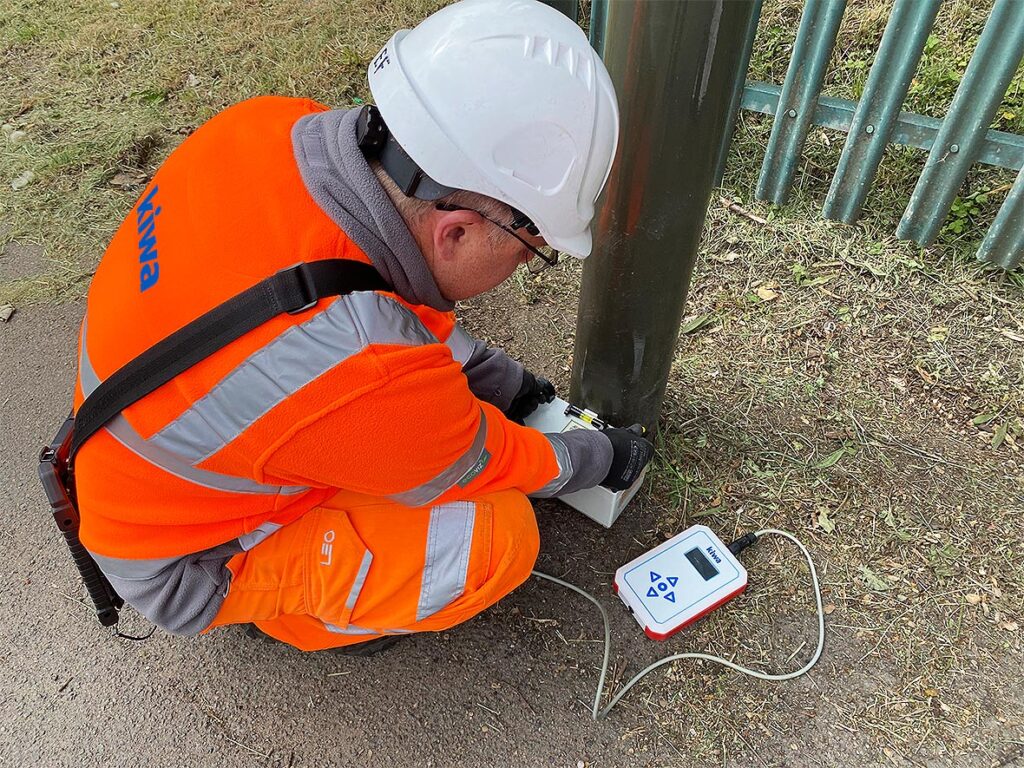
This is where the value of a specialist external test and inspection becomes clear. With their focus and knowledge of current regulation, the inspection company can assess, in detail, the assets that exist, their state of repair and remaining life, their level of compliance, and any action needed, in the form of a detailed report to the client.
This allows the private sector organisation to formulate a clear and achievable asset management plan to ensure all required work can be scheduled and undertaken in time for handover.
The support does not need to end there. The exercise can be repeated after, say, six or 12 months, to validate that work is on schedule.
Such an approach, harnessing the expertise of an inspector specialising in the area, whether it be street lighting, building safety, or any other aspect, can add similar value to the local authority when they take the asset back under their control. This ensures a consistent approach which demonstrates a commitment not just to compliance, but to best practice.
This service is offered by Kiwa, drawing on the company’s extensive global experience in testing and certification, with Kiwa able to offer the services of dedicated, accredited experts in every type of project covered by the PFI to deliver the required levels of insight and advice – informing action planning, ensuring compliance, and helping to minimise cost.
For both parties, an approach based on asset testing and inspection will provide a clear picture of the financial costs for which they are liable and provide a clear pathway to taking action to ensure safe, legal and uninterrupted service with a clear idea of cost too.