In a rapidly changing built-environment landscape, modular construction is no longer a fringe solution. It is increasingly viewed as a practical response to rising demand, tighter programmes and growing expectations around sustainability and performance.
Across education, healthcare and community infrastructure, traditional build timelines are often under strain. Labour shortages, weather dependency and live site constraints can all impact delivery certainty. Modern Methods of Construction (MMC) address these pressures by shifting significant elements of construction into controlled factory environments – improving predictability without compromising quality.
What Is Modular Construction in Practice?
Modular construction encompasses a range of offsite building approaches, from panelised systems to fully volumetric solutions. In each case, key building components are manufactured offsite and assembled on site, allowing different stages of the build programme to run in parallel.
While groundworks and foundations are prepared on site, structural elements are produced simultaneously in factory conditions. This mechanised approach offers several well-established advantages:
- Speed – modular projects can often be delivered 30–50% faster than traditional builds
- Quality control – factory manufacture enables tighter tolerances and consistent standards
- Reduced waste – controlled environments minimise material waste
- Improved safety and reduced disruption – less on site labour and controlled deliveries lower risk and impact on surrounding communities
Within this broad MMC landscape, panelised systems have become widely adopted for public-sector projects.
Where Panelised Systems Fit Within MMC
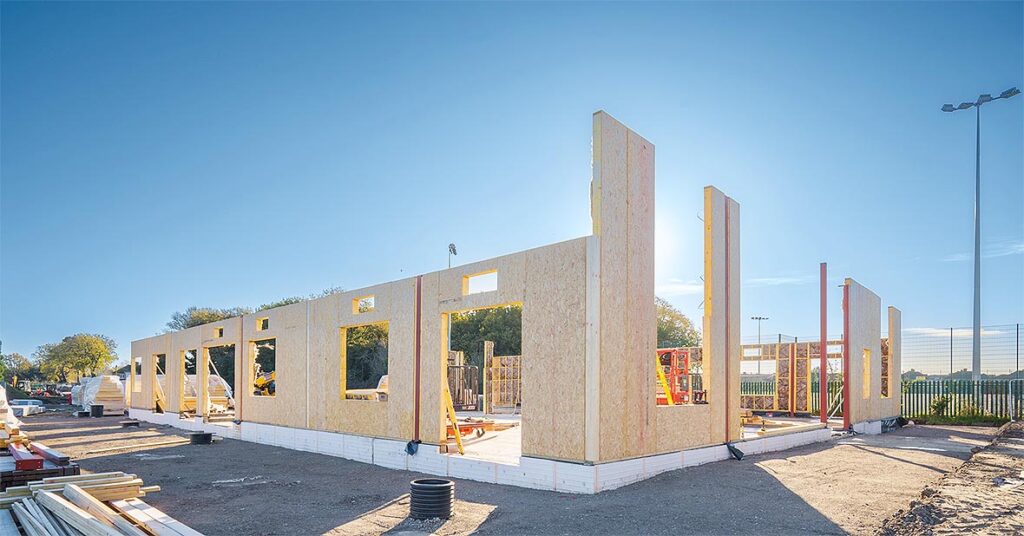
Modern Methods of Construction are often described according to how much of a building is manufactured offsite before it reaches the construction site. Panelised construction is a Category 2 MMC approach, meaning the building structure is formed using pre-manufactured wall, floor and roof panels, rather than fully finished volumetric units. These panels are manufactured in controlled factory conditions and transported to site for assembly onto prepared foundations.
Unlike fully volumetric modular construction, panelised buildings are not delivered as complete rooms or pods. Instead, the structural envelope is formed on site using factory manufactured components, offering a balance between offsite efficiency and on site flexibility, allowing for a greater degree of bespoke design elements and site accessibility. With a timber frame system, panels are typically produced with insulation and membrane layers, so performance requirements are inherent from the outset and the use of timber as the primary construction material also reduces the carbon footprint. Once delivered, the frame, panels and roof can be erected rapidly, allowing buildings to become weather-tight far earlier than with traditional methods.
Why Panelised MMC Is Gaining Traction in the Public Sector
Public-sector buildings must meet complex operational needs. Schools, colleges and community facilities need to be durable, energy-efficient and adaptable often while maintaining operations during construction. Panelised MMC is particularly well suited to these conditions.
- Programme certainty and reduced disruption
By moving much of the construction process off site, panelised systems reduce time spent on live sites. For education projects, this can allow installation during school holiday periods, significantly limiting disruption to teaching and learning. Earlier enclosure also reduces exposure to weather delays, supporting more reliable delivery.
Factory manufacturing supports consistent build quality across structural elements. For public-sector clients, this can reduce defects, support long-term performance and help control maintenance costs over the life of the building.
Compared with volumetric modular approaches, panelised systems allow greater freedom in layout and form. This makes them suitable for irregular or constrained sites, extensions to existing buildings, and specialist environments such as SEND provision.
Combining a fabric first approach along with cutting edge heating, cooling and lighting technologies and renewable energy sources such as solar PV, panelised modular buildings can be designed net-zero in operation. Combines with a low carbon structure, they are well suited to achieve net-zero in lifetime as will be the legal requirement from 2050.
Panelised MMC in Practice
The practicality of panelised MMC becomes most apparent when applied to real world settings.
Across public sector estates, panelised MMC is frequently selected for sites with uneven terrain, restricted access or ongoing occupation. Because panels are engineered offsite, structures can be designed to accommodate changes in level more effectively than traditional methods, while reduced on site activity improves safety and minimises disruption.
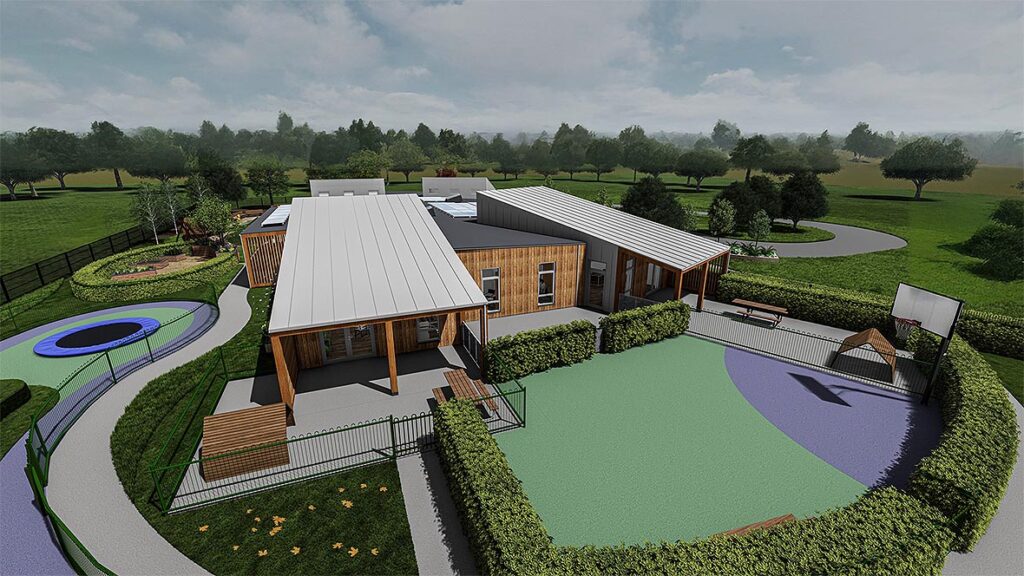
In specialist education environments, panelised systems allow acoustic performance, thermal comfort and safeguarding requirements to be designed into the structure from the outset. In one recent project, the building envelope was assembled within a single school holiday period, delivering a bespoke learning environment in time for the start or term.
For mainstream education, panelised MMC is commonly used to deliver permanent classroom and sixth form accommodation, replacing temporary buildings with higher performing spaces that retain flexibility for future adaptation. Programmes can be aligned with continuing educational activity.
Panelised systems are also widely used for community and sports facilities, including changing rooms and multiuse spaces, where durability and whole life performance are key considerations.
Addressing Common Challenges
Despite its advantages, modular construction can present challenges that require careful management. Some clients remain unfamiliar with MMC and may require support to understand how panelised systems differ from traditional construction. Early coordination between architects, engineers and manufacturers is essential to ensure designs align with manufacturing processes and site conditions. Clear specification and early engagement also help navigate regulatory and approval processes, ensuring performance requirements are understood and met from the outset. When these considerations are addressed early, panelised MMC can reduce overall project risk rather than introduce it.
Innovation and Long Term Performance
Digital design tools and factory-based quality frameworks continue to strengthen the case for modular construction, allowing closer integration between design, manufacture and assembly to improve predictability and reduce errors.
Panelised systems also support sustainability objectives by reducing waste, improving airtightness and enabling efficient use of materials. Shorter construction programmes further reduce site impacts, aligning with broader environmental and community priorities.
What Public Sector Specifiers Should Consider
When assessing MMC for a project, public sector clients should consider the importance of:
- programme certainty
- site constraints
- long-term performance and quality
- reduced on-site disruption
Where these factors apply, panelised systems often provide a practical and effective MMC solution.
Modular Construction as Strategic Infrastructure Delivery
Modular construction is more than a method; it is increasingly a strategic lever for public-sector clients facing tight delivery windows, sustainability targets and evolving infrastructure demands. By combining controlled offsite production with rapid on site assembly and design flexibility, panelised MMC offers a clear, adaptable route to delivering high quality public buildings with greater certainty.
If you would like to discover more about Modular Panelised Buildings, please visit the website below.