
It’s news to no one that shopping patterns have changed and high streets have evolved over the last 20 years. The downstream effect is that many buildings are underused and/or dormant. For owners, developers and architects, there’s a challenge in how we rethink these buildings so they can support new forms of work, community and cultural life, as well as public services.
Inside existing buildings, it’s high-quality, user-focused refurbishment and interior design that unlock real transformation. These interventions need to do more than respond to today’s brief – they must be future-ready, with the flexibility to adapt as needs evolve, ensuring spaces can support changing patterns of use over time.
AEW’s work at Oldham Spindles demonstrates how this can be achieved in practice.
Originally built in the 1990s, Spindles shopping centre was a shadow of its former self. Oldham Council acquired the building and took the opportunity to reimagine it as a multi-use civic and cultural hub. This would combine the existing retail offer with new market, event, archive and workspace uses in a single town centre location.
With such a dramatic change of use required, as Architect for the whole centre and Interior Designer of the Phase 1 workplace, we had to fundamentally rethink how the building worked internally – from the interventions needed to support new functions, to the quality of the day-to-day user experience.
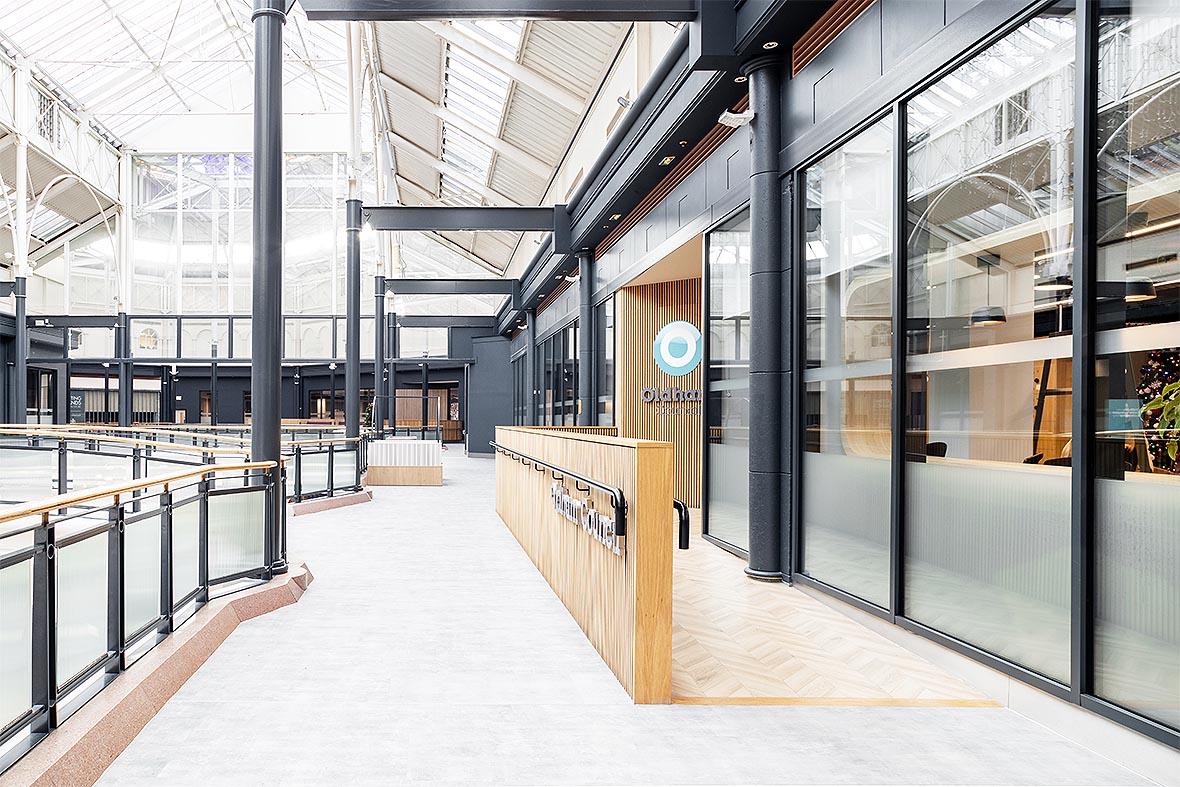
Shopping centres are not obvious candidates for office conversion. Their deep floorplates and inward-looking layouts present significant challenges around daylight, circulation and spatial organisation. At Spindles, we had to address those challenges.
Our first move was to consolidate the retail offer at ground floor, freeing up the upper levels to accommodate a new workplace for Oldham Council.
A series of targeted interventions helped transform the former retail units into a contemporary, high-quality working environment. New openings were introduced to the external façade, while former shopfronts were replaced with glazing to draw daylight deeper into the plan, creating brighter, more comfortable spaces for staff.
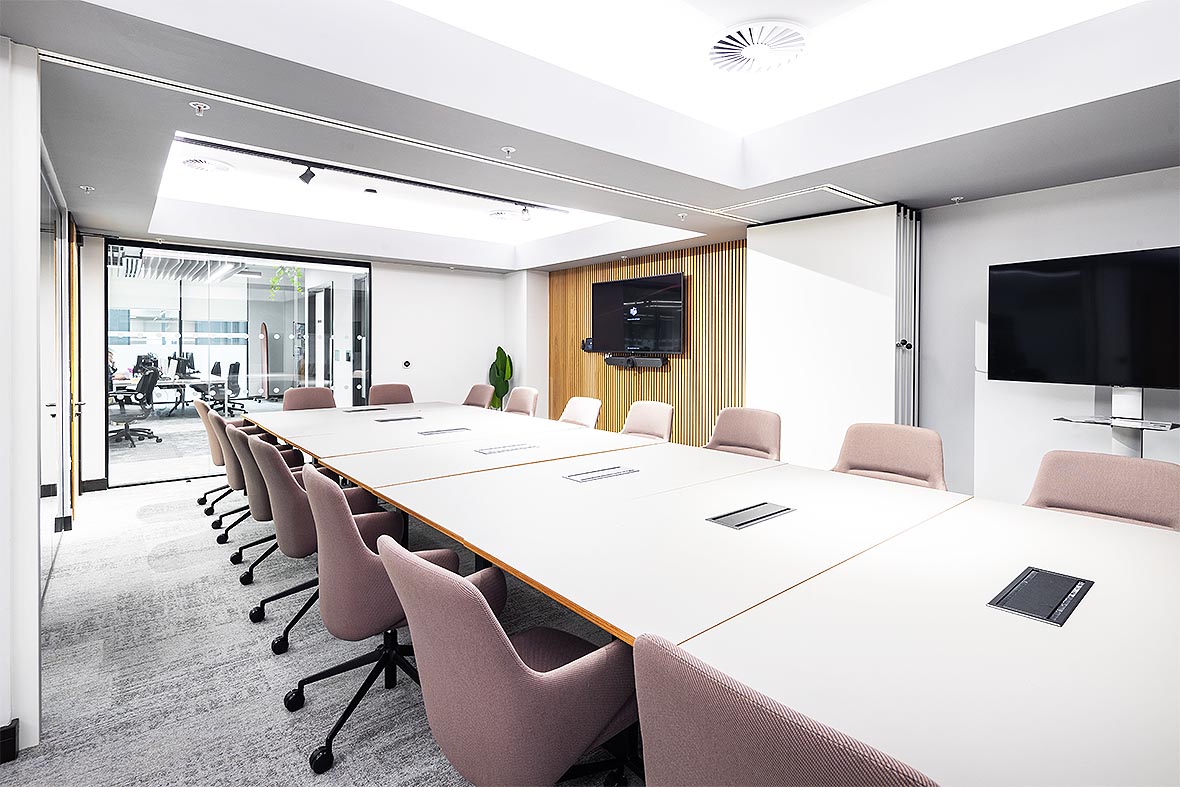
Across the floorplate, the spatial strategy focused on clarity, usability and collaboration. Workstations are positioned along the perimeter adjacent to the light-filled atrium to maximise access to daylight, while meeting rooms and quieter spaces are located deeper within the plan. The former mall at the heart of the building has been reimagined as a generous breakout and circulation space, allowing the workplace to extend beyond traditional desk settings.
The result is a layered environment where formal workspaces sit alongside informal areas for collaboration and social interaction.
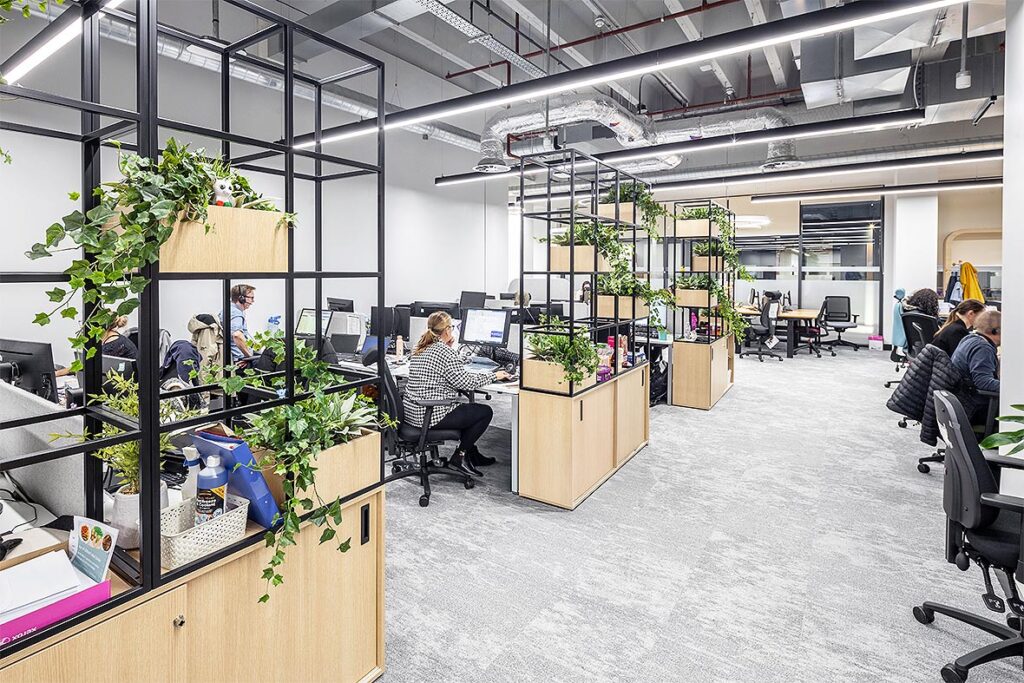
At Spindles, the relocation of staff from several offices created an opportunity to rethink how the organisation worked. The 9,000 sq ft Phase 1 workspace was therefore conceives as a pilot – allowing Oldham Council to test layouts, technologies and furniture in a live environment.
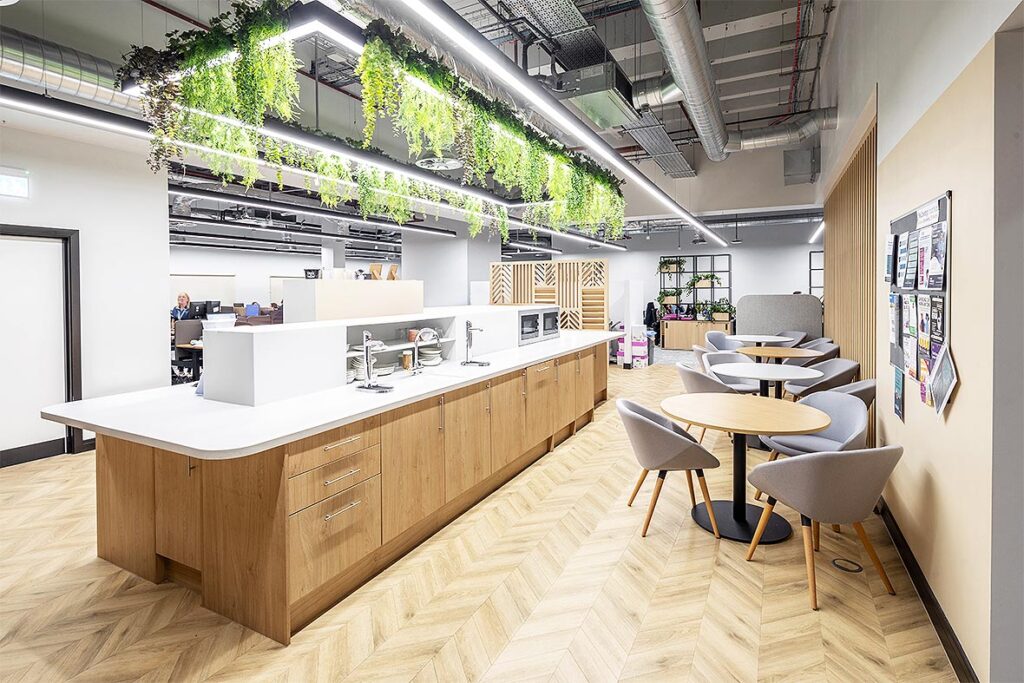
A key principle was providing a range of settings to support different ways of working, from open desk areas to meeting rooms, touchdown spaces and informal breakout zones.
This variety is particularly important in large, open-plan environments. By introducing a mix of settings – including areas both for individual focus and open collaboration – the design gives users greater control over how and where they work – supporting comfort, productivity and wellbeing.
Insights from the pilot informed the wider workplace strategy, which was later developed and delivered by SpaceInvader, with AEW continuing as Architect and Lead Designer.
As the last 20 years have shown, human behaviour rarely stays static, and that’s as true for the workplace as it is for the high street. Organisations grow, restructure and adopt new ways of working. The design we delivered had to take this into consideration.
The Phase 1 office was designed as an open plan environment organised into flexible zones, allowing the layout to be easily reconfigured as requirements evolve. With this philosophy and the selection of loose and easily demountable furniture and fittings, these zones can be adapted, expanded or removed without major structural interventions.
Across UK towns and cities, adaptive reuse is becoming central to regeneration. Knocking down and building from scratch is not only wasteful, but it denies communities the opportunity to reinvigorate buildings that have stood for decades. With an integrated architectural and interior design strategy that puts how existing buildings function under the microscope, we can create spaces that are flexible, resilient and valuable.
When it comes to future-proofing interiors, it’s not just about furniture or finishes. It’s about a defined spatial strategy, daylight, circulation and the relationship between different parts of a building.
When those fundamentals are addressed, interiors can evolve over time, supporting new patterns of use while maintaining a strong connection to the surrounding community.
For many town centres facing similar challenges, this approach will become increasingly valuable.