Across the UK, social housing landlords are facing an increasingly urgent challenge: persistent damp and mould in homes.
With recent legislative changes, including the Social Housing Regulation Act, or ‘Awaab’s Law’, which came into effect in October 2025, housing providers are under pressure to deliver long-term solutions that address the root cause of damp, rather than repeatedly treating symptoms.
For social housing, this isn’t just about responding quickly; it requires interventions that are cost-effective, durable and achievable without major disruption to residents’ lives. Traditional approaches, such as repeated cleaning and redecorating, or large-scale solid wall insulation retrofits, can be expensive, intrusive and only partially effective. Modern materials that combine practicality with performance are beginning to offer an alternative.
In this article, Luke Brooks, Senior Commercial Manager Specialist for Packed Products at Limelite, looks at how modern lime-based plasters can provide long-term, cost-effective solutions for social housing maintenance.
Understanding the scale of the problem
Damp and mould contribute to poor indoor air quality, exacerbate respiratory conditions and lead to increased complaints from residents. In social housing, recurring issues often stem from the very fabric of older buildings such as solid walls, thermal bridges and inadequate ventilation.
Landlords frequently find themselves trapped in a cycle of rinse, repair, redecorate and repeat, with budgets stretched and tenants’ trust eroded. Urgent legislative requirements now demand that these problems are addressed at source, meaning landlords must move from temporary fixes to solutions that prevent recurrence.
Why traditional approaches often fall short
Many current interventions rely on superficial solutions: repainting, chemical mould treatments, or installing ventilation alone. These approaches can provide short-term relief, but without addressing moisture trapped in walls, condensation or thermal inefficiencies, mould can quickly return.
Similarly, large-scale retrofits, such as solid wall insulation, while effective, come with significant disruption. They require altering wall depths, reducing living space, and can be costly in labour and materials. For busy social housing programmes, these factors often make comprehensive solutions impractical.
Modern lime plasters as a practical solution
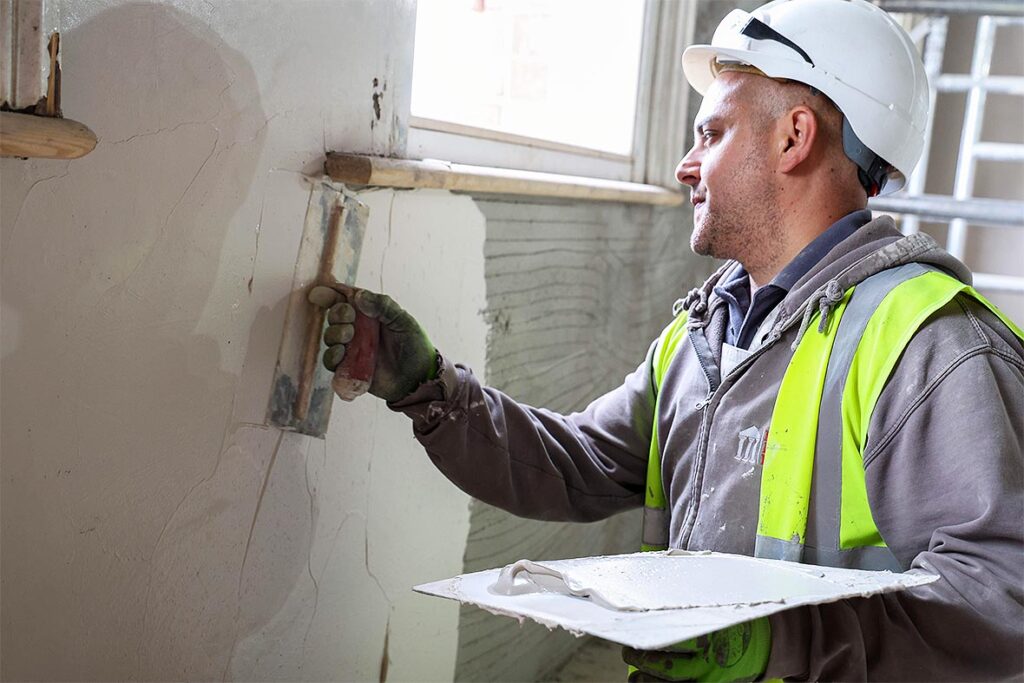
This is where modern lime-based plasters, such as Limelite Whitewall One Coat Plaster, come into their own. Designed to be easy to apply and fast-drying, they deliver a breathable finish that helps prevent recurring damp and mould. Unlike gypsum plasters, Limelite plasters allow moisture within walls to escape naturally, reducing the conditions that lead to mould growth and helping interiors remain healthier over time.
Their performance also extends to thermal efficiency. By incorporating expanded perlite, these plasters improve insulation, making walls warmer to the touch and reducing condensation risk. On average, Limelite renovating plasters offer thermal conductivity values around three times lower than standard gypsum, supporting more comfortable indoor environments while addressing a key cause of damp.
Lime is also naturally alkaline, which discourages the growth of mould and bacteria. This inherent property helps break the cycle of recurring damp problems, supporting longer-lasting results after treatment. By combining breathability, insulation benefits and mould-inhibiting characteristics, Limelite plasters enable landlords to tackle moisture issues at source, reducing repeat interventions, saving budget, and improving resident satisfaction.
Breaking the cycle in social housing
With complaints on the rise and legal obligations tightening, social housing providers cannot rely on short-term fixes. Using modern lime-based plasters provides a pragmatic route: effective, cost-conscious and minimally disruptive to residents.
Rather than repeatedly patching symptoms, landlords can address moisture, insulation, and mould inhibition in one intervention. This approach not only saves time and money but also restores confidence in housing services.
Balancing cost, effectiveness, and resident wellbeing
Modern lime plasters like Limelite offer a balance between practical delivery and long-term performance. They provide a scalable, affordable solution for social housing stock, ensuring maintenance programmes are effective without draining resources or creating excessive disruption.
By integrating modern materials with a clear understanding of building physics, social housing teams can meet new legislative requirements, break the mould cycle and improve the health and comfort of their residents.
Ensuring long-term success
Skilled application remains essential, but Limelite plasters are designed for efficiency, reducing the need for more niche, specialist knowledge while delivering professional results. With one-coat systems, the process is quicker, cleaner and compatible with a wide range of properties.
In social housing maintenance, respecting building performance and embracing practical innovation are not mutually exclusive. By balancing the two, landlords can safeguard residents, budgets and buildings for years to come.
To discover more about Limelite’s breathable plaster solutions for public sector buildings, visit the website below.